- Get link
- X
- Other Apps

Japanese Photo Tattoos
Good journeys start with loose itineraries. At Roger Robinson’s home in Northampton, by a rain-dappled window one windswept Wednesday, we pored over a large, unfolded Geographers’ A-Z of Great Britain splayed out across his kitchen table. Looking at this map, with its iconic blue/red/white colourway, we were reappropriating that old racist chant sung on British football terraces in the 1970s and 80s; there is Black in the union jack. From Hove to Hull, we had Black friends everywhere. Roger and I had spoken about a potential collaboration for years. I lent one of my photographs to the cover of Roger’s TS Eliot prize-winning collection of poetry, A Portable Paradise. For my birthday, Roger gave me a copy of The Sweet Flypaper of Life, a collaboration between two African Americans, the poet Langston Hughes and photographer Roy DeCarava, detailing everyday life in 1950s Harlem. I often mentioned the 1970s anthology Worlds: Seven Modern Poets, in which a group of photographers follow poets through the landscapes that inspire their writing, and my admiration of John Berger and Jean Mohr’s A Seventh Man, charting the struggles of European migrants, also from the 1970s. Model Eunice Olumide in the wind, 2021 ‘I’d never taken photographs of a model before,’ writes Johny Pitts, ‘and actually am not at all interested in fashion photography, but it was fascinating working with somebody who knows their body and face so well. Her lack of ego was interesting – she wasn’t interested in me... https://www.pinterest.com/shanepenland87/japanese-tattoo-designs/.
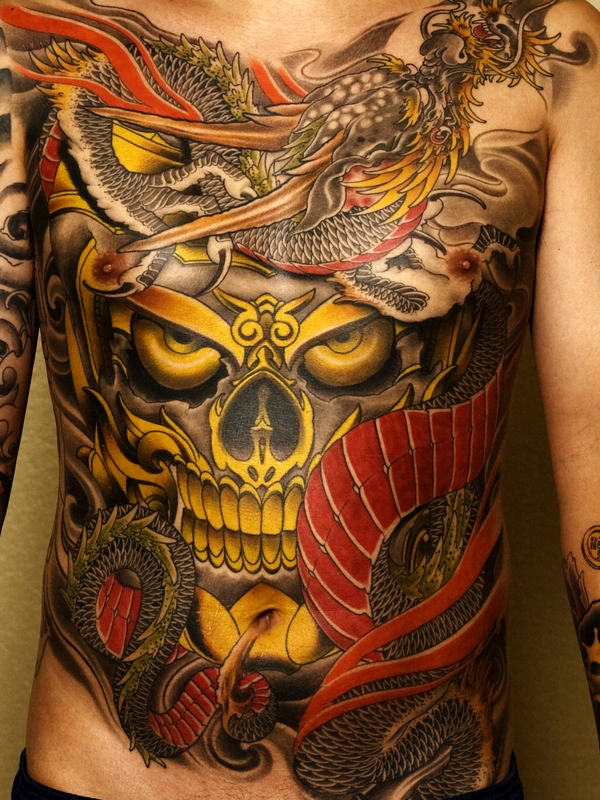
Japanese tattoo symbols and meanings We were, after all, living in the wake of austerity, the Windrush scandal, Grenfell Tower, a rise in racist rhetoric surrounding Brexit and the 2020 Black Lives Matter protests, following the murder of George Floyd, which led to the toppling of the Colston statue in Bristol. That this reflection should be a collaboration powered by our community was just as important. “Perhaps home is not a place,” wrote James Baldwin in his novel Giovanni’s Room, “but simply an irrevocable condition.” Baldwin’s characters were dealing with forbidden love, but the notion of home as an irrevocable condition resonates with a broader Black experience in Britain.

Japanese tattoo designs for females I had to laugh when he gave me a very un-ghetto story: at a writers’ conference in Mexico City he was impressed by the art of the local tattoo culture and, after a lot of consideration, he had the names of his wife, Nicola, and son, Caden, tattooed on his hands.’ Across generations, there was, on the surface at least, a new appreciation for the contribution of Black Britons, from Caleb Azumah Nelson, who won the Costa first novel award for Open Water, to Paul Gilroy, who received the Holberg prize for his contributions to sociology and cultural studies, among other fields, and Reni Eddo-Lodge, who broke book sales records with her polemic Why I’m No Longer Talking to White People About Race. Not to mention the many Black women artists such as Lubaina Himid, Liz Johnson Artur and Ingrid Pollard, who finally received much deserved attention from the art establishment with Turner prize nominations. It’s not that we should allow awards to define our contributions (and I will doubtless
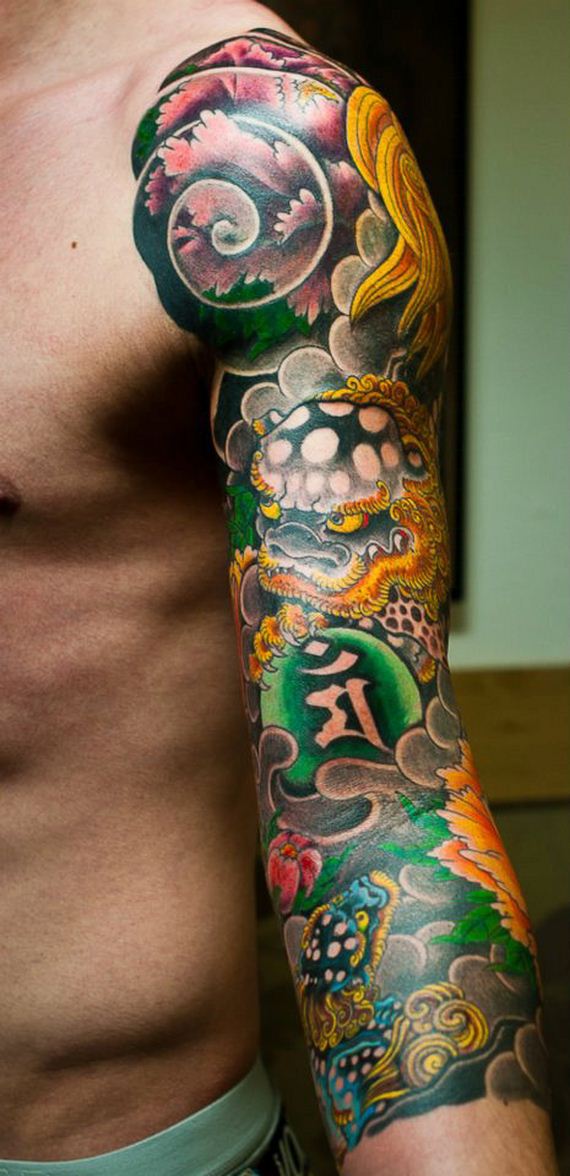
Traditional Japanese Tattoo Images
get into trouble for not naming so many more great Black British writers, artists and thinkers), but the praise suggested a flowering of Black knowledge work. The danger with a purely celebratory project about the Black community, however, is falling into the trap of producing a predictable coffee table book full of hero shots. Those books have their place, but too often ignore the quiet contributions made by the Black community at an everyday level, those who won’t be receiving an MBE and are often on the frontline of a multicultural backlash. The Ghanaian security guard, the street sweeper from Jamaica, the Nigerian nurse helping to deliver babies through a pandemic, the Somali teacher decolonising the curriculum – all overlooked in favour of studio portraits of Lenny Henry or Frank Bruno. But Blackness, not to mention Britishness, is more complicated than that and our project demanded a more complicated form in order to reflect a Black life in Britain that can sometimes verge on the surreal. Meshach, Blackpool, 2021‘We met the Gordon brothers at Auntie T’s Spice Shak, around the corner from our tiny B&B. We spent the day together, four Black men, discussing our hopes for the future, and the trials and tribulations of the past. The brothers’ father had seen Blackpool as a sort of utopia, a place to retire and rest in, but died shortly after moving the family there from Lewisham. The boys had to grow up quick in their new... https://www.gettyimages.com/photos/japanese-tattoos.

Japanese Tattoo Background Designs
divide by travelling up Britain’s central artery. On the eve of the second world war, George Orwell charted a path through industrial cities to carve out a portrait of working-class lives in The Road to Wigan Pier, guided by his network in the National Unemployed Workers’ Movement. In the 1980s, travel writers Jonathan Raban and Paul Theroux travelled the coast in opposite directions, unaware that the other had a similar idea until an awkward meeting in Brighton; their respective books, Coasting and The Kingdom By the Sea, each tell a different version of events. Then there are the psychogeographers; Ian Nairn, Will Self, Iain Sinclair, Laura Oldfield Ford and Patrick Keiller, the last using an imagined character, Robinson, to pontificate – albeit compellingly – on London’s secret corners. The Activist, Cop 26, Glasgow, 2021‘On our journey, we often bumped into Extinction Rebellion protesters – first at St Ives during the G7 summit, later in Glasgow at the Cop26 Climate Change conference. They’re doing important work, but I was frequently frustrated at the lack of Black and working-class people at the protests. I saw this young woman on the very last day. There was something touching about the hand-made cardboard sign, which, in its low-techness seems so humble next to the all- conquering iPhone she’s holding. As the late scholar Mark Fisher wrote, it’s easier to imagine the end of the world than the end of capitalism.’ These offbeat journeys transfigure banal scenes... .

Japanese tattoo designs for men Replenish; home a refuge, home a blessed space, a glowing hearth from which seraphim hold in their hand offerings of bright orange embers. Home a space of solace for the bones in your skin to relax. Perhaps there’ll be space to grow, where weary minds can bloom. And the spirit of a room? The spirit of all rooms are degrees of warmth; and people; and talk, so too the spirit of a home, love. Roger Robinson What would happen if we took all of this stuff and told a story through our eyes, using the Black experience as the prism through which to document a British journey?
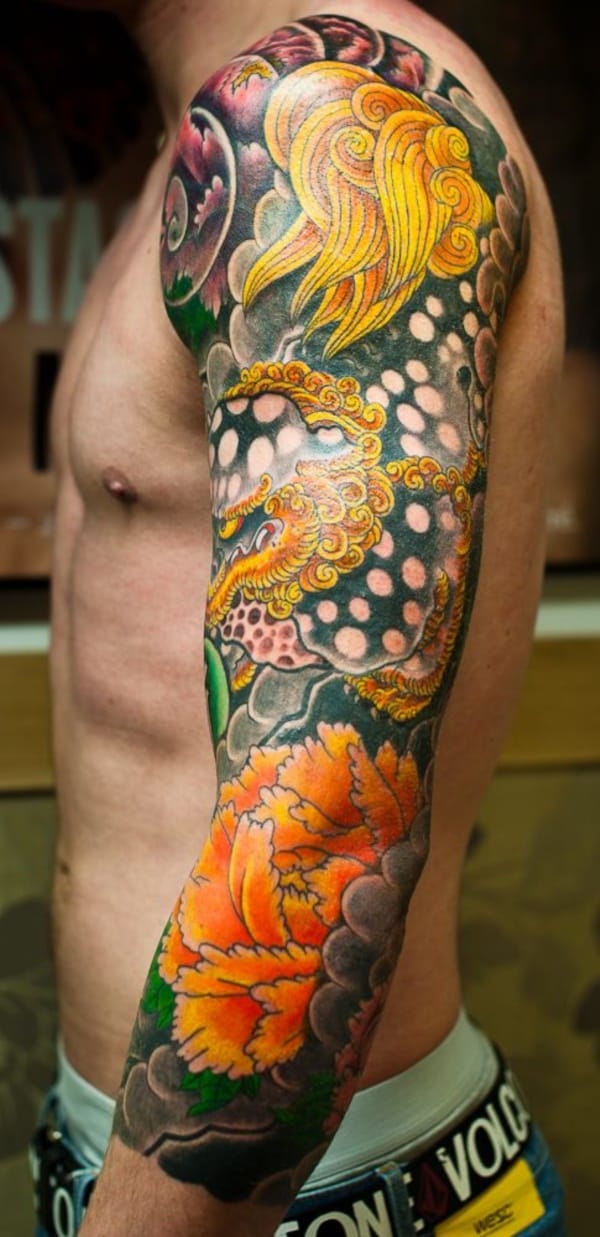
Japanese Best Tattoo Designs
that didn’t work out. I’m wary of photographs that look too perfect.’ So in late winter 2021, we set off in a rented red Mini Cooper, following the coast clockwise, chasing the promise of brown skin in marine light (though thanks to our Great British weather in the end I would describe the colour palette of my images more as “kente cloth in fog”), through rain, sleet and snow. We left London and followed the River Thames east, towards Gravesend, where Pocahontas is buried, and where, just across the river at Tilbury, the Empire Windrush docked in 1948. Too often, that is where the history told about Black Britain begins and ends, but we continued, following the coast clockwise through Margate, Dover, Brighton, Southampton, Plymouth, Land’s End, Bristol, Cardiff, Liverpool, Blackpool, Belfast, Glasgow, John O’Groats, Edinburgh, Newcastle, Scarborough, Hull, Skegness, Orford Ness and Southend-on-Sea. Student, Gillingham, 2021‘As well as the Black community, a lot of my photographs capture the weather in the UK. It was only later that I noticed this schoolboy’s tie blowing wildly in the breeze. In some of my work, the image is as much autobiography as it is social documentary. I remember those walks to and from school, the precariousness of the teenage years, the dreams and frustrations, and that’s what I recognised in this young man’s lonely figure.’In Blackpool, at Auntie T’s Spice Shak, we met two brothers who offered differing accounts of growing up Black at... .

Japanese tattoos for women We mostly travelled together but creatively we made parallel journeys – Roger would spend hours writing in whichever B&B we’d found, while I would be out making photographs, then we’d come together at the end of a long day to argue about comedy (in which Roger has terrible taste), gossip about the hip-hop rumour mill and philosophise our findings. Sometimes, on longer drives, we’d just listen to music and share stories or simply process the stories of others we’d just met. Bianca, Margate, 2021‘My friend Ayo bought a place in Margate a few years ago and told me that in 15 years it would be like Brighton.

Japanese Themed Tattoos
the Troubles with the writer Tim Brannigan, a former member of the IRA whose mother had an affair with his father, a Ghanaian doctor, and in order to keep her brown baby a secret, had sent her newborn into foster care for a year before adopting him. These stories, invoked subtly through poetry and photography, reflect the diversity not just within British history, but within the Black experience itself. The secret that all my favourite photographers have realised is that a photograph is not at all worth a thousand words, especially when the words are put together with the craftsmanship of a poet like Roger. Rather, a photograph, in my opinion, is something more like a haiku; a small amount of information contained in a tight, disciplined structure, which may conjure a thousand associations. So though narratives lurk in the images, haunt the poems, they are never entirely explained. We didn’t aim to produce a document about Black Britain, but rather of Black Britain; a pensive stroll, with Roger interpreting the stories by crafting images with his pen and me trying to make poetry with my camera. Roger rarely attempted to explain my photographs, I didn’t try to illustrate his words. In the end, I see this work as a contribution to a wider collection all too often missing from Britain’s imaginary family album as constructed by white British documentary photographers and writers; of a Blackness that exists outside news cycles and on-trend hashtags; of the everyday humanity of the... .
Comments
Post a Comment